The Panama Canal
A Strategic Waterway at the Heart of US-China Tensions
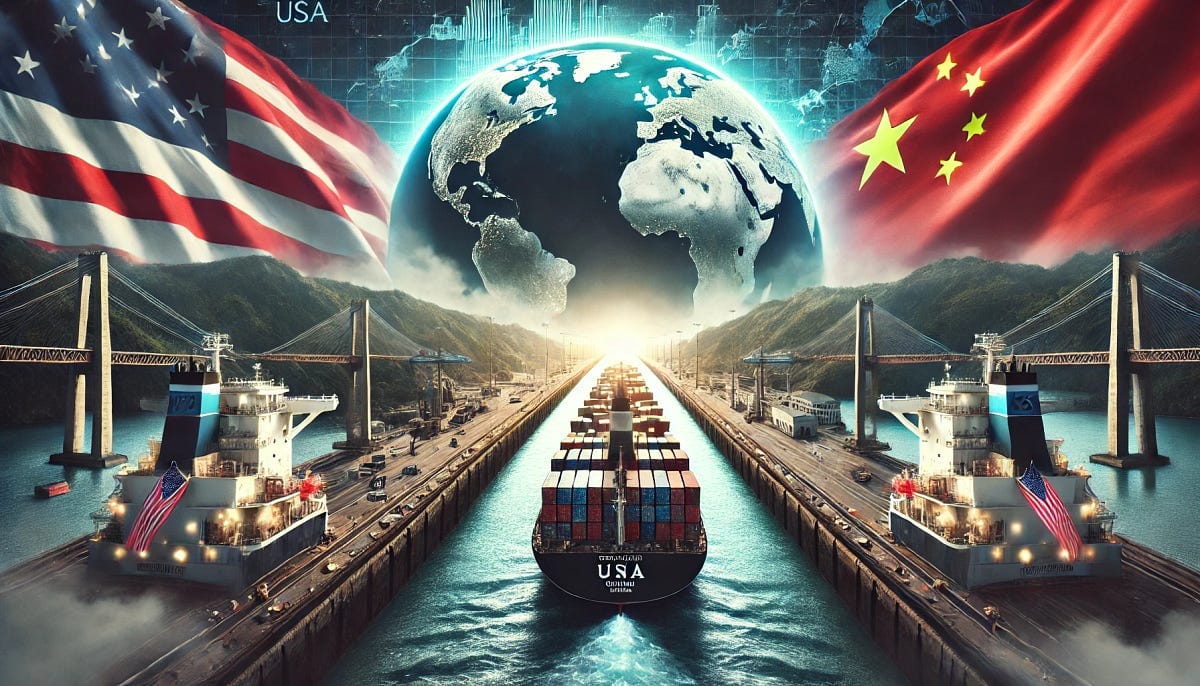
The Panama Canal has long been a linchpin in global maritime trade, offering a crucial shortcut between the Atlantic and Pacific Oceans. Its strategic significance has made it a focal point of international interest and, at times, contention. Recently, the canal has reemerged as a flashpoint in geopolitical tensions, particularly involving the United States and China.
But where exactly is the Panama Canal, and why has it become a focal point of conflict between the U.S. and China? Let’s explore it in this article.
What is the Panama Canal?
The Panama Canal is an artificial 82-kilometer waterway in Panama that is a conduit for maritime trade between the Atlantic and Pacific Oceans. The canal is crucial for US national security and global trade, with around 72% of transiting ships connected to US ports.
Historical Context
Panama is a transcontinental nation which connects the North and South American continents. Bordered by Costa Rica to the west, Colombia to the southeast, the Caribbean Sea to the north, and the Pacific Ocean to the south, its strategic location has made it a critical juncture for international trade and military endeavors.
Panama was earlier a Spanish colony, but broke away from Spain in 1821 and joined the Republic of Gran Colombia, which was a union of Nueva Granada, Ecuador, and Venezuela. Gran Colombia was dissolved in 1831, and then Panama and Nueva Granada eventually became the Republic of Colombia.
With the backing of the United States, Panama seceded from Colombia in 1903. Soon after, the United States Army Corps of Engineers started the construction of the Panama Canal in 1904, which was completed in 1914.
The Panama Canal was initially under American control until the Torrijos–Carter Treaties of 1977 set the stage for its eventual transfer to Panama. By December 31, 1999, Panama assumed full sovereignty over the canal, marking a significant shift in its administration.
The treaty consists of two key agreements: the Panama Canal Treaty and the Treaty Concerning the Permanent Neutrality and Operation of the Panama Canal, commonly known as the Neutrality Treaty.
The Neutrality Treaty ensures that the Panama Canal remains permanently neutral, open to vessels of all nations on equal terms. It also grants both the United States and Panama the right to defend the canal against any threats to its neutrality and secure its uninterrupted operation.
China’s Growing Influence
In recent years, China’s Belt and Road Initiative (BRI) has extended its reach into Latin America, with Panama becoming a notable participant. Chinese investments have flowed into various sectors, including significant infrastructure projects. Notably, Hong Kong-based CK Hutchison Holdings operates ports at both the ends of the canal, enhancing China’s logistical footprint in the region.
In a major diplomatic shift in 2017, Panama also became the first and only Latin American country to cut all diplomatic ties with Taiwan and accept the “One China Policy”.
U.S. Concerns
The United States has expressed apprehension regarding China’s expanding presence near the canal. It argues that such influence could compromise the canal’s neutrality and pose risks to global shipping routes and military logistics.
In his inaugural address on 20th January US President Donald Trump criticized China’s involvement in the Panama Canal and declared USA’s intention to reclaim control over this strategic waterway. Shortly thereafter, the new US Secretary of State Marco Rubio embarked on his first official foreign trip to Panama, where he met with Panamanian President José Raúl Mulino. Following their discussions, President Mulino announced that Panama would not renew its participation in China’s Belt and Road Initiative when the current agreement expires in 2026. Mulino also claimed that no military threat was posed over the canal’s sovereignty.
Panama’s Position
Panama maintains that it exercises full sovereignty over the canal and is committed to its neutral operation, as stipulated in international treaties. However, the public opinion within Panama is divided on this issue. While many citizens view the canal as a vital component of national identity and pride, there is criticism regarding government management and foreign partnerships. Some Panamanians also echo the US concern over the increasing foreign influence, particularly from China, and its potential impact on Panama’s sovereignty.
International Implications
The Panama Canal is a critical artery for international maritime commerce, facilitating the transit of approximately 14,000 vessels annually. Geopolitical tensions surrounding the canal could lead to disruptions, affecting global supply chains and trade flows. The uncertainty may prompt shipping companies to seek alternative routes, potentially increasing costs and transit times.
The escalating tensions between the US and China over the canal may also have broader implications for Latin America. Countries in the region may find themselves navigating a complex landscape of alliances and economic dependencies. The situation could influence regional politics, with nations weighing the benefits of Chinese investments against the desire to maintain strong relations with the United States.
Potential Outcomes
From the US point of view, the only acceptable path forward would mean expulsion of China from this region to ensure the canal’s continued neutrality and efficient operation. However, as the U.S.-China trade war continues to evolve into a broader strategic rivalry, the Panama Canal could also become a critical point of contention. The canal’s role in facilitating a significant portion of global maritime trade means that any disruption could have far-reaching economic consequences.
Any conflict over the Panama Canal would have profound implications for global trade and security. Disruptions to canal operations could lead to significant delays and increased costs for shipping, affecting supply chains worldwide. Moreover, a standoff between two major powers in this region could destabilize Latin America, leading to broader geopolitical repercussions.
Conclusion
The Panama Canal remains a linchpin of global commerce, and its control is a matter of international significance. The current tensions underscore the complex interplay of national interests, economic ambitions, and strategic considerations. As the situation evolves, the international community must closely monitor these developments, and try for a resolution that upholds the canal’s neutrality and ensures the continued free flow of trade.