The H1B Debate
At the end of December 2024, a heated debate erupted on social media among individuals in the political and tech sectors in America…
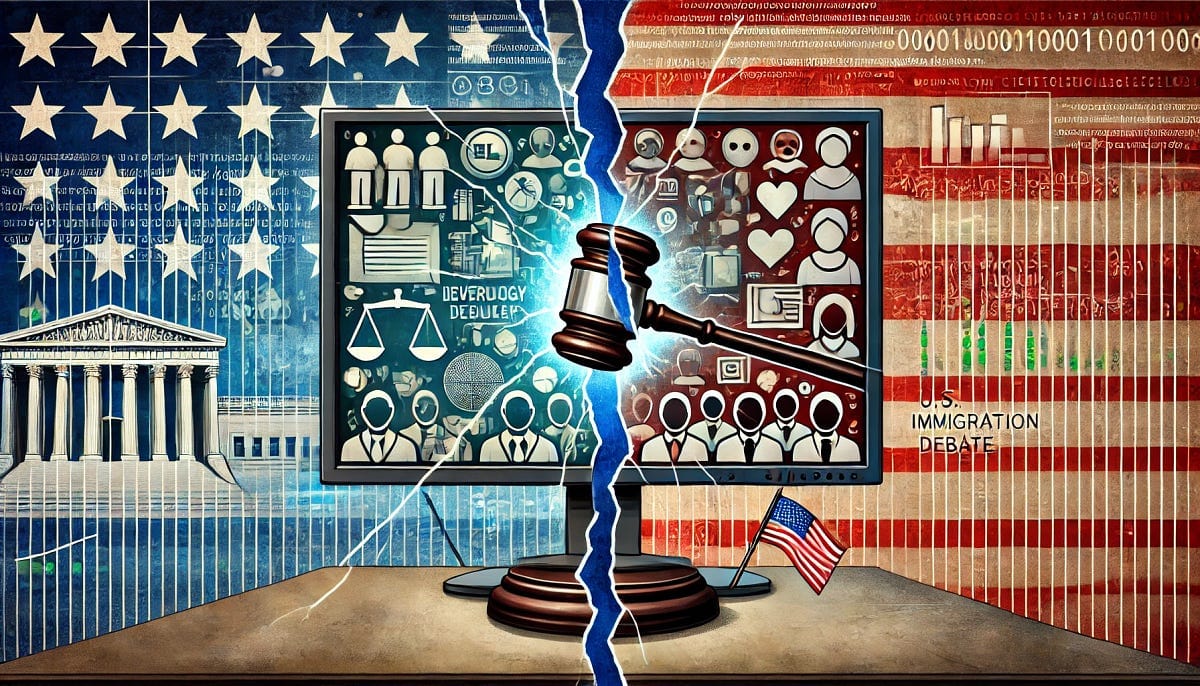
At the end of December 2024, a heated debate erupted on social media among individuals in the political and tech sectors in America regarding the H-1B visa program. This program allows American companies to hire temporary foreign workers in specific fields. The debate also exposed divisions among the supporters of newly elected U.S. President Donald Trump.
The controversy began with Trump’s appointment of Indian-American entrepreneur and tech expert Sriram Krishnan as his AI advisor. Some overzealous, white supremacist Trump supporters, argued that Krishnan’s Indian heritage would lead him to favor foreigners over American citizens in the critical AI sector.
These so-called Trump supporters escalated their rhetoric, calling for the termination of the H-1B visa program and the expulsion of all Indian-origin individuals from the U.S. They also made baseless, offensive, and racist remarks targeting Indians, Hinduism, and even the Hindu deities.
In response, business leaders like Elon Musk, CEO of Tesla and SpaceX, came out in support of the H-1B program. Musk emphasized that the program was vital for attracting skilled engineering talent and maintaining America’s technological supremacy. Indian-American entrepreneur Vivek Ramaswamy also supported Musk. Ramaswamy, a biotech pioneer and co-chair of Trump’s proposed Department of Government Efficiency, faced harsh criticism for his stance.
Amid the escalating controversy, President-elect Trump clarified his position, expressing strong support for the H-1B program. A prominent businessman himself, Trump stated, “Many H-1B visa holders work in my establishments. I have always supported H-1B… It’s a fantastic program.
History of the H-1B Program
Established under the Immigration Act of 1990, the H-1B visa program was designed to allow U.S. employers to hire foreign professionals in specialty occupations requiring specialized knowledge and at least a bachelor’s degree or higher. The program aimed to address labor shortages in critical sectors, particularly in science, technology, engineering, and mathematics (STEM) fields. Over the years, the program has undergone several modifications, including the introduction of an annual cap on visas and the implementation of a lottery system to manage oversubscription.
Annual H-1B Visa Issuance
The H-1B visa program has an annual cap of 85,000 visas, including 20,000 specifically reserved for individuals with advanced degrees from U.S. institutions. Once the cap is reached, a lottery system is used to select the applications that will be processed.
Criticisms of H-1B
Critics argue that some companies exploit the program on a large scale, replacing American workers with cheaper foreign labor. Additionally, the program ties employees to their visas, creating a “bonded labor” situation.
Trump’s so-called supporters demand that all U.S. jobs be reserved for Americans. However, by “Americans,” they actually meant only white people. They even expressed the desire to expel all the Indian-origin individuals, including the ones who were born in the US and are American citizens.
Annual Green Card Allocations
The U.S. issues approximately 140,000 employment-based green cards annually, along with about 225,000 family-based green cards. An annual cap ensures that no more than 7% of green cards are issued to individuals from any single country. This quota is based on the applicant’s country of birth, not citizenship.
The Problem of Illegal Immigration
While racism is unacceptable under any circumstances, it cannot be denied that the presence of foreign workers sometimes creates employment challenges for American citizens. However, the real issue is not the H-1B program but illegal immigration.
As of 2022, there were an estimated 11 million (1.1 crore) unauthorized residents in the US, with approximately 8.3 million (83 lacs) participating in the workforce — making up about 4.8% of the total workforce.
The rising number of illegal immigrants from India should be a cause for concern for us. Until 2019, the number of Indians coming to the US illegally was approximately 8,000 per year. However by 2023, this number had surged to 97,000 annually, and in 2024, it had most likely exceeded 1,00,000. Alarmed by this trend, the Indian government has also recently announced an investigation into a racket involving fake colleges in Canada, which help individuals illegally enter the US through Canada.
Aspiring immigrants from India who pay hefty sums to human traffickers to reach the US or Canada must understand that hoping for a better future is not wrong, but risking their lives to cross borders illegally is not only a crime, but it’s also highly unsafe and unwise. Thousands of people lose their lives every year in such attempts, which is a deeply tragic reality.
Conclusion
The H-1B visa program has significantly contributed to America’s economic growth and innovation. While reforms are necessary, eliminating it entirely is not a practical solution. A balanced immigration policy is crucial for America’s future.
#H1B, #H1BVisa, #ImmigrationDebate, #TechIndustry, #ForeignWorkers, #USImmigration, #VisaPolicy, #TechJobs, #STEMWorkforce, #SkilledImmigration, #WorkVisa, #ImmigrationReform, #TechWorkforce, #HiringPractices, #EconomicPolicy