The GIUK Gap
Strategic Significance in Contemporary North Atlantic Geopolitics
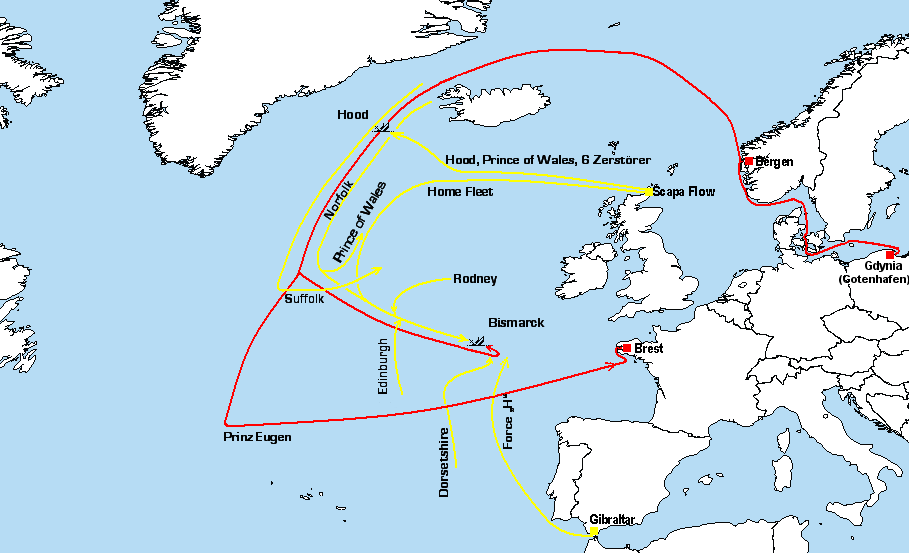
The Greenland-Iceland-United Kingdom (GIUK) Gap occupies a vital place in the security architecture of the North Atlantic. Acting as a natural maritime chokepoint between the Arctic Ocean and the wider Atlantic basin, it has historically served as a focal point for naval operations and deterrence strategies. From its pivotal role during the Cold War to its re-emergence amid present-day geopolitical competition, the GIUK Gap continues to influence the strategic calculus of NATO and its adversaries.
Historical Foundations of Strategic Relevance
The strategic relevance of the GIUK Gap was first established during the two World Wars, when control of the North Atlantic sea lanes became imperative for the Allied war effort. Both the UK and the US recognized that protecting maritime routes between North America and Europe required early detection and neutralization of German U-boats. As a result, surveillance and airbases were established in Iceland and Greenland, enhancing Allied capacity to track and intercept enemy submarines. These foundational steps laid the groundwork for a more systematic approach to maritime defense in the following decades.
The Cold War transformed the GIUK Gap into one of the most heavily surveilled maritime corridors in the world. The Soviet Union’s Northern Fleet, headquartered in Murmansk, relied on passage through this gap to deploy its ballistic missile and attack submarines into the North Atlantic. Recognizing this, NATO integrated the GIUK Gap into its broader anti-submarine warfare (ASW) doctrine. The Sound Surveillance System (SOSUS), a vast array of underwater listening devices, was deployed across the gap to monitor Soviet submarine activity. The region effectively served as NATO’s tripwire in the North Atlantic — any hostile movement through the gap triggered a rapid military response. Air and naval facilities in the UK, Iceland, and Norway supported this forward posture.
Post-Cold War Decline and Strategic Revival
The end of the Cold War ushered in a period of strategic neglect for the GIUK Gap. With the perceived decline in Russian naval power and a shift in focus toward counterterrorism and regional conflicts, NATO reallocated resources away from traditional maritime defense. Much of the SOSUS network was decommissioned or downgraded, and regular patrol missions dwindled. While this reflected broader defense drawdowns in the 1990s and early 2000s, it left a critical vulnerability in the alliance’s maritime defense infrastructure.
In the last decade, however, geopolitical developments have rekindled interest in the GIUK Gap. Russia has significantly modernized its Northern Fleet, producing a new generation of submarines with improved acoustic stealth and longer operational range. In 2019, a major Russian naval exercise tested the ability of submarines to pass undetected through the GIUK Gap and operate in the North Atlantic. This assertiveness underscores Russia’s intent to re-establish a credible maritime presence in the region, prompting NATO to recalibrate its force posture accordingly.
Arctic Geopolitics and the Expanding Threat Landscape
Simultaneously, the Arctic is also undergoing unprecedented transformation. Melting sea ice is gradually opening new shipping routes, such as the Northern Sea Route along Russia’s coast and potentially a transpolar passage in the future. These developments create new economic opportunities but also complex strategic risks. The GIUK Gap, as the main corridor between the Arctic and the Atlantic, becomes the linchpin through which all maritime movement must pass. This geographical reality reaffirms the gap’s importance as a critical surveillance and control zone.
Beyond Russia, other actors are increasingly present in Arctic affairs. China, while geographically distant, has declared itself a “near-Arctic state” and has articulated ambitions through the “Polar Silk Road.” Chinese investments in Arctic research stations, ports, and infrastructure are growing. Though its military presence in the region remains limited, China’s increased activity necessitates greater strategic awareness from NATO states. The possibility of joint Russian-Chinese exercises or dual-use infrastructure supporting undersea operations cannot be discounted.
NATO’s Strategic Adaptation and Force Readiness
To respond to these challenges, NATO has taken concrete steps to bolster its posture in the GIUK Gap. The re-establishment of the U.S. Second Fleet in 2018 symbolized a renewed commitment to Atlantic security. Allies have expanded investments in intelligence, surveillance, and reconnaissance (ISR) capabilities, particularly in maritime patrol aircraft and undersea monitoring systems. Radar systems in the Faroe Islands and airbases in Iceland have been modernized, while the UK has recommitted to ASW by acquiring advanced P-8 Poseidon aircraft.
Joint military exercises such as Trident Juncture have increased in both frequency and complexity, emphasizing rapid reaction and interoperability in harsh maritime environments. These exercises also aim to simulate contested scenarios involving both conventional and hybrid threats. Moreover, emerging technologies are being integrated into NATO’s operational toolkit. Autonomous underwater vehicles (AUVs), artificial intelligence for sonar processing, and space-based surveillance platforms are all contributing to a more robust and adaptive maritime security architecture.
Operational Challenges and Strategic Considerations
Nonetheless, formidable challenges persist. Russia’s advanced submarine platforms, such as the Yasen-class, possess stealth features that strain current detection technologies. The geographic and environmental harshness of the North Atlantic — characterized by deep oceanic trenches, strong currents, and frequent storms — further complicates surveillance and response efforts. Real-time domain awareness across such an expansive area requires continuous investment in both human and technological capital.
There are also institutional and political challenges. Iceland, a key location in the GIUK Gap, has no standing military and relies on alliance support. Greenland, while part of the Kingdom of Denmark, presents logistical hurdles due to its remoteness and sparse population. Coordinated defense of the GIUK Gap therefore depends on effective burden-sharing and pre-positioned resources among NATO allies.
Importantly, the GIUK Gap must be viewed as part of a broader multidomain defense framework. Modern conflicts are no longer limited to conventional domains. Cyberattacks on naval communications, space-based disruption of GPS systems, and disinformation campaigns targeting public opinion can all impact maritime readiness and decision-making. A comprehensive strategy that integrates the GIUK Gap into cyber, space, and information warfare planning is essential to NATO’s deterrence posture.
Conclusion: Strategic Continuity in a New Geopolitical Era
The GIUK Gap remains a strategic corridor of immense relevance in today’s evolving security environment. Its location — linking the Arctic with the Atlantic — ensures that it will continue to be a central theater in any future conflict involving transatlantic powers. With rising geopolitical competition, environmental changes, and technological advances reshaping the maritime domain, NATO must reaffirm its commitment to this critical chokepoint. Continued investments in infrastructure, enhanced allied cooperation, and integration of emerging technologies will be vital to preserving freedom of navigation and ensuring collective defense. In the decades to come, the GIUK Gap will not just be a maritime passage — it will be a barometer of strategic stability in the North Atlantic.
#Geopolitics, #StrategicStudies, #GlobalSecurity, #MaritimeSecurity, #DefenseStrategy, #MilitaryGeopolitics, #GIUKGap, #NorthAtlantic, #ArcticSecurity, #AtlanticStrategy, #NATO, #NATOSecurity, #SubmarineWarfare, #AntiSubmarineWarfare, #SurveillanceStrategy, #NavalPower, #MilitaryTechnology, #HistoryAndStrategy, #ColdWarLegacy, #ArcticGeopolitics, #GreatPowerCompetition, #MaritimeChokepoints