The Chagos Archipelago
Between Sovereignty, Strategy, and Justice
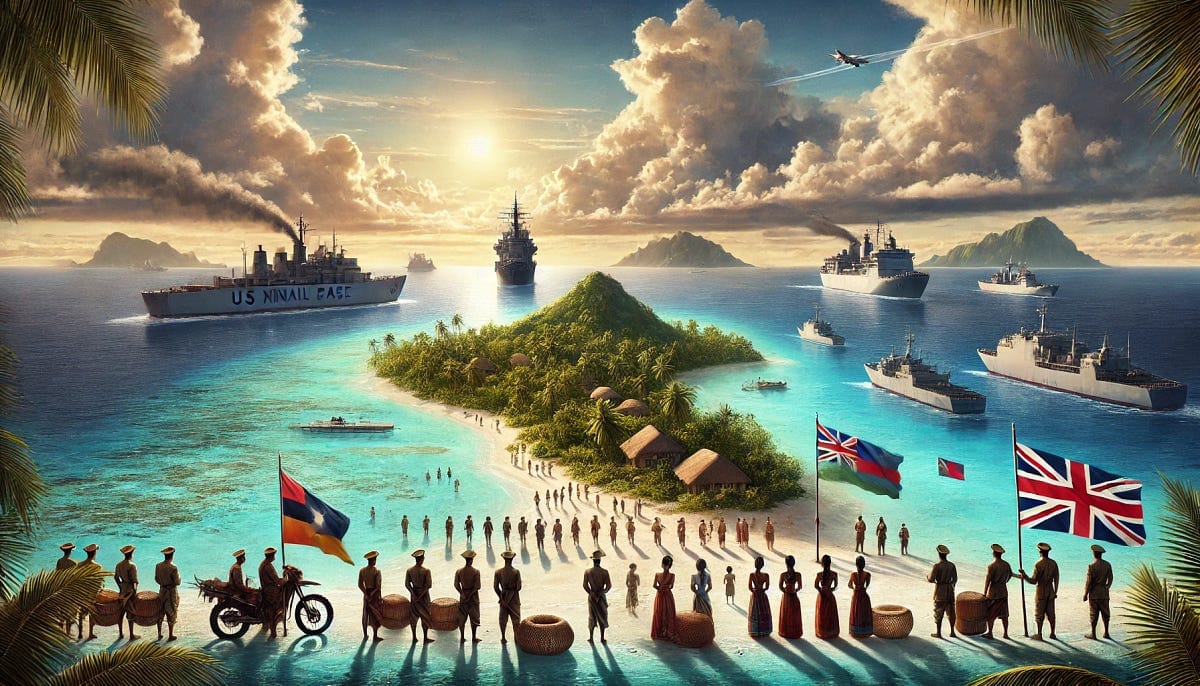
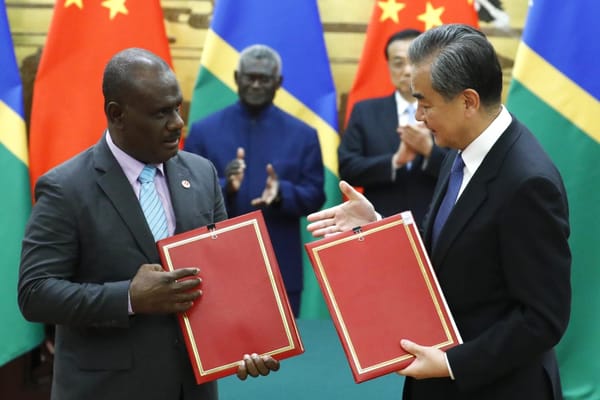
On May 22, 2025, the United Kingdom and Mauritius signed a historic agreement involving the Chagos Archipelago — a remote cluster of islands in the Indian Ocean — with the aim of resolving a long-standing colonial dispute while preserving military access to the strategically important island of Diego Garcia. Under this agreement, full sovereignty over the archipelago was transferred to Mauritius — a symbolic and political milestone in the decades-long call for decolonization. At the same time, Diego Garcia, home to a major US-UK military base, remains under British administration for a period of 99 years, with the possibility of extension.
While officials in Port Louis celebrate and policymakers in London declare a new chapter, the displaced Chagossian community — still living in exile decades after their forced eviction — finds little to celebrate. Their concerns remain at the fringes of a geopolitical arrangement that has implications not just for the region’s strategic landscape, but also for human rights and historical accountability.
Historical Context
In the late 1960s and early 1970s, nearly 2,000 Chagossians were forcibly evicted from their homeland to facilitate the construction and operation of a US-UK military base on Diego Garcia. The archipelago had been separated administratively from Mauritius in 1965, just before the latter attained independence from British colonial rule. The objective was to ensure that the United Kingdom retained strategic control over the territory at the height of Cold War tensions.
Mauritius had long argued that the United Kingdom’s separation of the Chagos Archipelago was illegal and violated international principles of decolonization. In response to these claims, the United Nations General Assembly formally requested the International Court of Justice in 2017 to provide an opinion on the legal status of the UK’s continued administration of the islands.
In 2019, the ICJ issued its advisory opinion, concluding that the UK’s actions were in violation of international law and that the process of decolonization remained incomplete. This verdict was further reinforced by a UNGA resolution calling for the decolonization of the territory and the return of the islands to Mauritius.
The establishment of Diego Garcia as a forward-operating base was driven by the need to counter the expanding Soviet influence in the Indian Ocean. Over time, the base became a key asset for US and British military operations across various theaters — including Iraq, Afghanistan, and more recently, in maritime operations across the Indo-Pacific. It continues to serve as a critical platform for surveillance missions, logistical coordination, and regional security preparedness, underscoring its continued relevance in contemporary geopolitics.
The 2025 UK–Mauritius Agreement
The agreement signed in May 2025 formally transferred sovereignty over the Chagos Archipelago to Mauritius. However, Diego Garcia will remain under British military control for an initial period of 99 years. This lease ensures uninterrupted operations under the existing joint command structure.
Financially, the UK has agreed to pay Mauritius a total of slighly over £3 billion GBP (approx. $3.8 billion USD) over the lease period, in addition to annual payments estimated at around £165 million GBP (approx. $210 million USD) during the initial years, reducing to £120 million GBP (approx. $150 million USD) in subsequent years. While the financial terms are significant, critics argue that no monetary compensation can make up for the moral and historical responsibility owed to the displaced Chagossians.
Chagossian Voices and Human Rights Concerns
The absence of any clear provisions for the return or compensation of Chagossians in the agreement has triggered widespread dissatisfaction among members of the community. They contend that despite the shift in sovereignty, the agreement fails to redress the deep injustices suffered by generations of Chagossians who remain stateless, disenfranchised, and disconnected from their ancestral land. With no legal framework outlined for resettlement or citizenship, many fear that this agreement may represent the final closure of any realistic chance of return. Human rights organizations have echoed these sentiments, urging both the UK and Mauritius to formulate a parallel mechanism that prioritizes the concerns and rights of the displaced population.
Political Reactions
In the United Kingdom, Prime Minister Keir Starmer described the agreement as a pragmatic compromise — one that upholds Britain’s national security interests while also addressing prolonged legal and diplomatic challenges. He stressed that Diego Garcia remains a cornerstone of the UK’s strategic presence in the Indo-Pacific and a key component of the Five Eyes intelligence alliance.
However, critics — particularly from the Conservative opposition — have accused the government of relinquishing sovereign territory and burdening British taxpayers with an expensive and geopolitically uncertain arrangement. They also expressed apprehension that the deal could allow for external influence, especially from China, through its growing presence in Mauritius.
On the other hand, the Mauritian government hailed the agreement as a landmark achievement in its post-colonial journey. Authorities plan to ceremonially raise the national flag across the archipelago symbolizing the restoration of territorial integrity. Observers believe the agreement could boost Mauritius’s diplomatic influence in regional forums such as the Indian Ocean Rim Association, and potentially strengthen ties with India.
Geopolitical Flashpoints
From a strategic point of view, the deal allows Western powers to retain uninterrupted access to one of the most important naval outposts in the Indian Ocean. As maritime trade routes face growing threats from piracy, regional unrest, and global rivalries, the strategic value of Diego Garcia has increased. The continued military presence ensures quick deployment capability and unhindered intelligence-sharing across the region.
India has welcomed the agreement, viewing the transfer of sovereignty to Mauritius as a counterbalance to China’s expanding naval ambitions in the Indian Ocean Region. Strengthening India–Mauritius ties — through development aid, maritime cooperation, and diplomatic alignment — is consistent with India’s broader Indo-Pacific vision.
However, concerns persist. Some experts warn that the substantial financial inflows from the UK could make Mauritius more receptive to Chinese diplomatic and economic overtures. There is apprehension that Beijing may use its growing regional presence to gain influence near such a strategic installation. With China’s increasing footprint across Indian Ocean ports — from Sri Lanka to East Africa — such concerns are not without basis.
Australia and other members of the Five Eyes alliance have backed the continuity of operations at Diego Garcia, underscoring its importance for regional stability, counter-terrorism, and deterrence. They see the agreement as a model for reconciling decolonization with military continuity.
What Lies Ahead
The way forward is a mix of promise and uncertainty. A smooth implementation of the agreement will require ratification by both nations, efficient transition protocols, and robust monitoring to ensure compliance. It may also enhance Mauritius’s role in regional security architecture and diplomacy. However, failure to address the unresolved grievances of the Chagossians may result in renewed legal battles in UK courts and appeals to global human rights forums, adding complexity to an already sensitive arrangement.
There is also the risk that political changes within Mauritius could impact the security environment around Diego Garcia. A future government more inclined towards China or less aligned with Western interests might recalibrate existing strategic equations. Hence, while the agreement offers a temporary balance, its long-term viability depends on how both domestic and international dynamics evolve.
==============================================================
If you found this article informative, please also share your thoughts in the comments below — I’d love to hear your perspective. And don’t forget to follow me for more in-depth analysis and updates on global politics and international affairs!
===============================================================
#ChagosArchipelago #UKMauritiusAgreement #DiegoGarcia #Decolonization #Geopolitics #InternationalLaw #HumanRights #Chagossians #IndianOceanRegion #GlobalPolitics #StrategicInterests #PostColonialJustice #FiveEyesAlliance #IndiaForeignPolicy #ChinaIndiaRivalry