Redrawing the Arctic Resource Map
Greenland and Europe’s Strategic Mineral Partnership
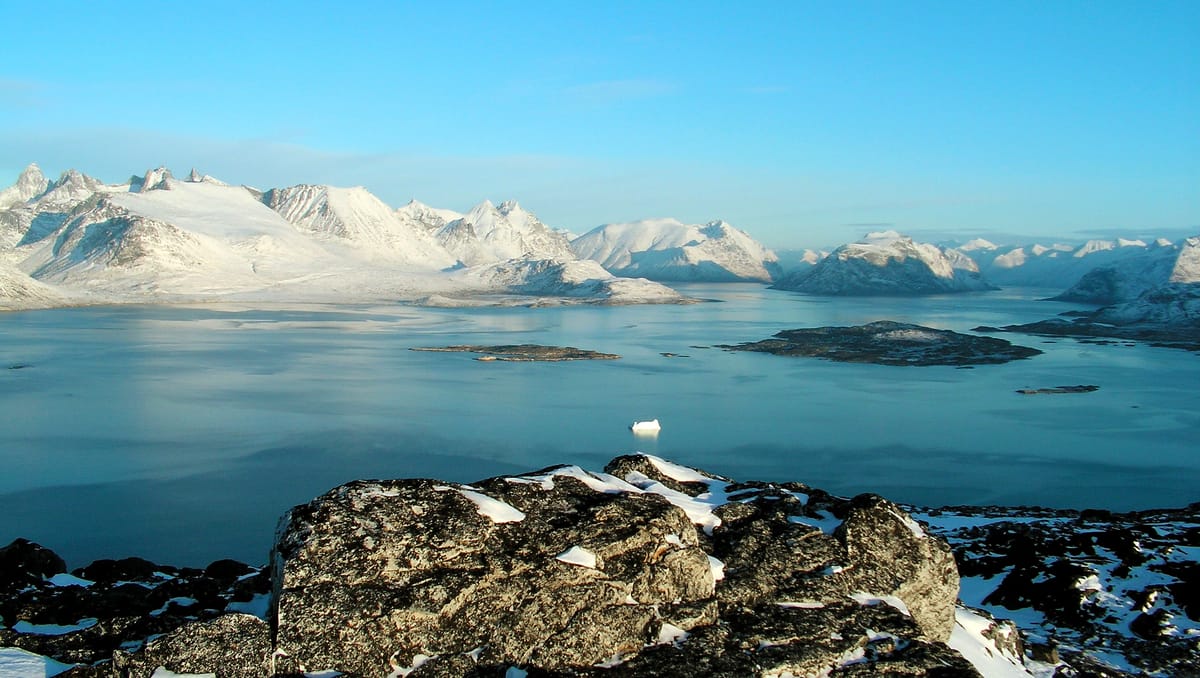
In a transformative development with wide-ranging geopolitical implications, Greenland has entered into a 30-year mining agreement with a Danish-French consortium to extract anorthosite — a mineral essential to low-carbon aluminum and advanced composites. This agreement underscores Greenland’s strategic orientation toward Europe in the competition for secure, sustainable sources of critical raw materials, while reinforcing the European Union’s long-term strategy to reduce reliance on China and Russia.
Overview of the Agreement
The contract awards exclusive mining rights to Greenland Anorthosite Mining (GAM), a joint venture involving Denmark, Greenland, and the French Jean Boulle Group. The targeted extraction site lies near the Qeqertarsuatsiat fjord in western Greenland, a region known for its geological richness and relative proximity to infrastructure corridors. Anorthosite, valued for its high aluminum and calcium content, is considered a more sustainable alternative to traditional bauxite in aluminum production and is also a key input in the fiberglass industry. Its extraction could reduce the carbon footprint of major European manufacturing sectors, especially those tied to renewable energy infrastructure and construction.
This marks the inaugural mining license issued under Greenland’s revised 2024 Mining Act. The updated legislation reverses previous sequencing by permitting Environmental and Social Impact Assessments (ESIA) to occur post-licensing. This shift aims to streamline investment inflows while maintaining regulatory oversight over environmental and community concerns. In effect, it allows Greenland to become more attractive to international partners without compromising its environmental stewardship, which remains central to its national identity and international image.
Strategic Resource Development Goals
As an autonomous territory within the Kingdom of Denmark, Greenland has increasingly sought to diversify its economy beyond fishing and Danish fiscal support. With vast reserves of rare earth elements, uranium, and other strategic minerals, Greenland is uniquely positioned to contribute to the global clean energy transition and digital infrastructure buildout. However, political risk, limited logistical infrastructure, and environmental sensitivities have historically dampened investor confidence.
The new agreement signals a more proactive approach by Greenlandic authorities to tap into mineral wealth under clearly defined international environmental frameworks. It also implicitly critiques the absence of actionable investment from previous interested parties, especially the United States, which has expressed geopolitical interest in Greenland but offered few concrete economic initiatives. Greenland’s decision to proceed with European stakeholders highlights the strategic value it places on long-term planning, regulatory transparency, and developmental parity.
Moreover, the agreement opens pathways for Greenland to play a more influential role in discussions surrounding Arctic governance, sustainability, and regional economic integration. As Arctic ice continues to recede, exposing new shipping routes and resource opportunities, Greenland’s example may influence how other territories engage with the shifting dynamics of polar geopolitics.
Implications for the European Union
For the EU, this partnership advances a key objective: ensuring secure access to critical raw materials required for its climate and technological ambitions. Anorthosite’s compatibility with low-emission aluminum production dovetails with the European Green Deal and broader efforts to bolster supply chain resilience. This is particularly important as the EU aims to decarbonize its economy by 2050 while maintaining industrial competitiveness.
Unlike China’s state-driven extractive model or previous U.S. overtures laden with strategic posturing, the EU’s approach emphasizes co-development — joint research, infrastructure financing, and skills development within host communities. This model appears to align closely with Greenland’s values and long-term development aspirations. It also provides a framework for managing Arctic resource development that other non-EU nations may study or emulate.
In addition, the EU-Greenland agreement is expected to serve as a test case for implementing the principles of the European Critical Raw Materials Act. This legislation aims to establish stronger partnerships with like-minded countries and reduce vulnerabilities in Europe’s material supply chains. Greenland’s participation may open the door for additional collaborative ventures involving research institutions, universities, and green technology developers.
Governance, Environmental Oversight, and Local Engagement
The Qeqertarsuatsiat project is projected to require a minimum five-year preparatory phase before commercial operations commence. During this time, GAM is mandated to conduct comprehensive ESIAs and community engagement initiatives. The Greenlandic government has reiterated that public input will be instrumental in determining the project’s final structure. Several local town hall meetings and stakeholder dialogues are already being planned to ensure inclusive governance throughout the project’s lifecycle.
The anticipated benefits include significant job creation in underemployed regions, expanded transport and power infrastructure, and local economic revitalization. These long-term dividends could potentially outlast the lifespan of the mine itself. The influx of capital investment may also support spin-off enterprises in logistics, environmental monitoring, and technical education, further embedding the mine’s impact into the local economic fabric.
Nevertheless, mining remains a polarizing issue within Greenland. Supporters view it as a pathway to economic self-determination, while critics raise valid concerns about ecological degradation and the displacement of traditional livelihoods. The success of this project will hinge on the government’s capacity to enforce its environmental safeguards and mediate social tensions. Transparency in regulatory decision-making and consistent stakeholder communication will be crucial in maintaining public trust and long-term viability.
Redefining Greenland’s Global Role
This agreement is emblematic of Greenland’s evolving posture in global affairs. No longer merely a geopolitical appendage, Greenland is positioning itself as a deliberate actor capable of shaping its own development trajectory. By aligning with European partners over more interventionist alternatives, Greenland underscores the importance of transparency, shared governance, and environmental ethics in modern resource diplomacy.
As global demand for strategic minerals accelerates, Greenland’s governance model and selective partnerships may serve as a template for other environmentally sensitive but resource-rich jurisdictions. In doing so, Greenland is staking a claim not only in economic geography but in the moral geography of development. It seeks to prove that small, autonomous nations can lead by example in responsible resource extraction and global environmental leadership.
The true measure of this deal’s impact will lie in whether it successfully integrates economic opportunity with ecological and social responsibility in one of the world’s most fragile ecosystems. If it succeeds, it could serve as a landmark in Arctic development, forging a path that balances prosperity with protection — one rock at a time.
#Geopolitics #Sustainability #StrategicPartnership #GreenEnergy #CleanTech #Greenland #EuropeanUnion #ArcticResources #Anorthosite #CriticalMinerals #MiningEthics #ClimateTransition #ResourceDiplomacy #GlobalDevelopment #EnvironmentalGovernance #SupplyChainSecurity #RenewableEnergy #EUClimatePolicy #GreenlandPolicy #ArcticStrategy #EUIndustrialPolicy #Decarbonization