Mexico’s Coast-to-Coast Rail Project
A New Era for Trade and Connectivity
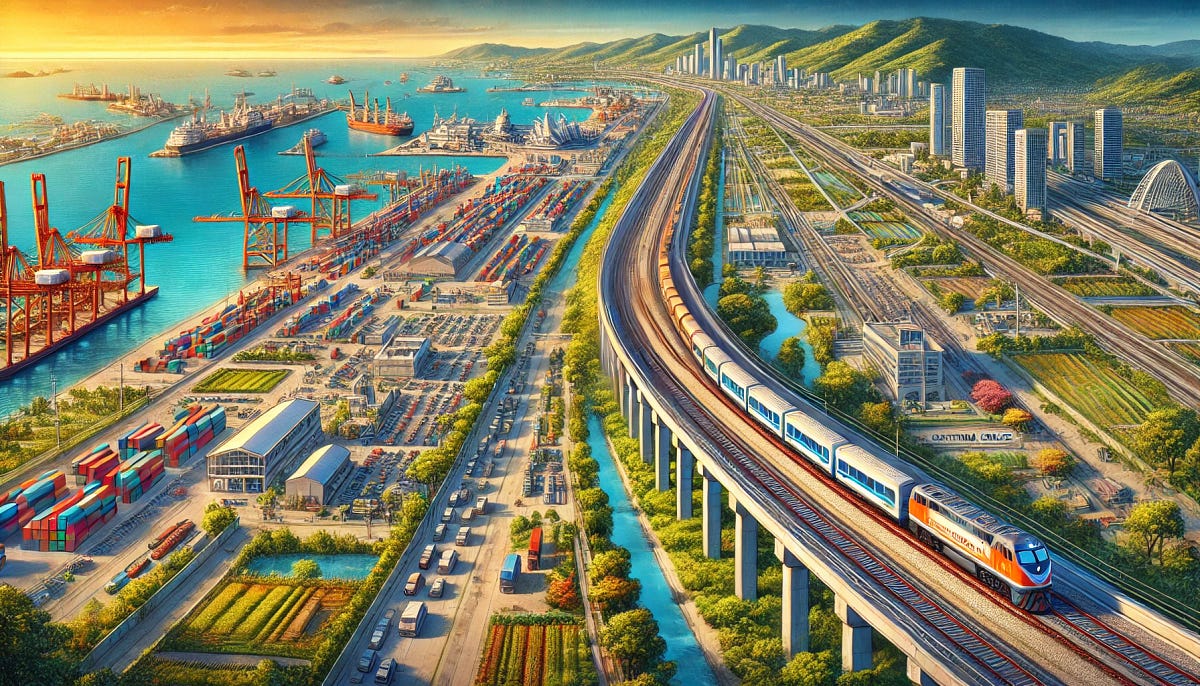
Mexico’s Interoceanic Corridor of the Isthmus of Tehuantepec has officially come to life, signaling a bold move to reshape the country’s role in global trade. In December 2023, passenger services were launched on this transformative coast-to-coast railway, offering a direct link between the Gulf of Mexico and the Pacific Ocean. As global shipping faces increasing congestion and challenges, this project is being hailed as a critical step in diversifying trade routes and unlocking economic potential in southern Mexico.
Overview of the Project
The Interoceanic Corridor is a 303-kilometer long railway line stretching across the Isthmus of Tehuantepec, the narrowest point in Mexico. It connects Coatzacoalcos, Veracruz, on the Gulf coast, to Salina Cruz, Oaxaca, on the Pacific. Designed for dual functionality, the railway supports both passenger and cargo transportation, aiming to streamline movement between the two oceans.
Central to the project are upgraded ports at both ends of the line. Coatzacoalcos and Salina Cruz have been modernized to handle larger vessels and increased cargo volumes, boosting their operational capacities. Beyond the ports and railway, the corridor includes plans for ten industrial parks, which are expected to serve as hubs for manufacturing, logistics, and economic activity.
To further bolster the economic appeal of the Interoceanic Corridor, the Mexican government has implemented an attractive package of fiscal incentives for businesses willing to invest in the region. Companies setting up operations in the designated industrial parks along the corridor can benefit from substantial tax breaks, including a complete income tax exemption for the first three years, followed by up to 90% reduction in the subsequent three-year period.
This strategic move aims to accelerate industrial development and job creation in the area. The corridor’s planners have also identified key industrial sectors aligning the project with global economic trends and Mexico’s existing strengths, such as electrical and electronics manufacturing, semiconductor production, automotive assembly, medical device fabrication, pharmaceutical development, and agribusiness. By focusing on these high-value sectors, the Interoceanic Corridor seeks not only to become a logistical powerhouse but also to position itself as a hub for advanced manufacturing and innovation, further cementing Mexico’s role in global supply chains.
Strategic Importance
The Interoceanic Corridor is being positioned as a faster and more cost-effective alternative to the Panama Canal for certain shipping routes. While the Panama Canal remains a vital artery for global trade, its increasing congestion, high tolls, and limitations on vessel size have prompted interest in complementary solutions.
Mexico’s railway offers unique advantages. Its proximity to the United States provides logistical efficiency for North American trade, particularly for goods traveling between Asia and the eastern United States. By bypassing maritime routes, the railway can also reduce shipping times for regional cargo, making it an attractive option for industries that prioritize speed and flexibility.
For Mexico, the corridor reinforces its strategic role in global trade networks. As countries seek diversified trade routes, the Interoceanic Corridor positions Mexico as a critical player in connecting North America to Asia and beyond.
Economic Impact
The economic potential of the Interoceanic Corridor extends beyond the movement of goods. The ten planned industrial parks along the railway route are expected to attract significant private investment, fostering the growth of manufacturing, logistics, and related industries. These parks are not just logistical nodes but economic engines, designed to stimulate job creation and economic activity in southern Mexico, a region that has historically lagged in development.
Job creation is a key promise of the project. Thousands of direct and indirect jobs are expected to emerge from construction, port operations, industrial activities, and services supporting the railway. Local businesses, too, stand to benefit from increased connectivity, gaining access to larger markets and reduced transportation costs.
Environmental and Social Considerations
While the Interoceanic Corridor has been lauded for its economic promise, it has also raised significant environmental and social concerns. The Isthmus of Tehuantepec is home to rich biodiversity, including critical habitats for many species. The construction and operation of the railway and associated infrastructure have the potential to disrupt ecosystems and alter the region’s natural balance.
Indigenous communities in the region have also voiced concerns about the project. Many worry about the potential loss of cultural heritage and land rights, as well as the broader social impacts of rapid industrialization. Activists and environmentalists have called for greater transparency and consultation with affected communities to ensure that development is both equitable and sustainable.
In response, the Mexican government has pledged to adopt environmentally friendly practices and engage with local stakeholders.
Timeline and Current Progress
The Interoceanic Corridor represents the revival of a historic railway first inaugurated in 1907. Over the decades, the original railway fell into disrepair, overshadowed by maritime trade routes. The current project, announced in 2019, was envisioned as a modern solution to meet the needs of 21st-century trade.
Construction efforts focused on upgrading the railway infrastructure and modernizing port facilities. By December 2023, passenger services were operational, marking a major milestone. In the next phases, the government plans to expand cargo capabilities and develop the industrial parks, further integrating the corridor into regional and global trade systems.
Broader Implications
The Interoceanic Corridor is part of Mexico’s broader infrastructure strategy, aimed at reducing regional disparities and enhancing the country’s competitiveness in global markets. Its success could have ripple effects on trade patterns, particularly in North America and Asia, and may influence the future of interoceanic logistics.
As global trade evolves, the corridor’s role as an alternative to the Panama Canal could reshape shipping dynamics. By offering a land-based solution, Mexico stands to gain leverage in international trade discussions, enhancing its geopolitical standing.
Current Problems in the Panama Canal
The Panama Canal, despite its historical importance, is grappling with significant challenges. Drought conditions have reduced water levels in Gatun Lake, a key reservoir for the canal’s locks. As a result, the canal has implemented restrictions on vessel sizes and the number of daily transits, leading to delays and higher shipping costs.
Additionally, the increasing size of modern vessels has strained the canal’s capacity, even after its 2016 expansion. These issues underscore the need for alternative trade routes like Mexico’s Interoceanic Corridor, which can complement, rather than compete with, the canal.
Conclusion
The Interoceanic Corridor of the Isthmus of Tehuantepec is a bold vision for Mexico’s future, blending historic ambition with modern economic imperatives. By offering an alternative trade route and fostering regional development, the project has the potential to redefine Mexico’s role in global logistics.
However, its success depends on addressing environmental and social concerns, ensuring equitable development, and navigating logistical challenges. As the world watches, the Interoceanic Corridor stands as a test of how infrastructure can balance progress with sustainability, promising a new era for trade and connectivity.