The IMIP Airport Controversy: A test of Indonesian Sovereignty
A private airport at a Chinese-dominated nickel-processing complex in Indonesia has sparked national sovereignty concerns, exposing tensions between foreign investment-driven industrialization and state regulatory control.
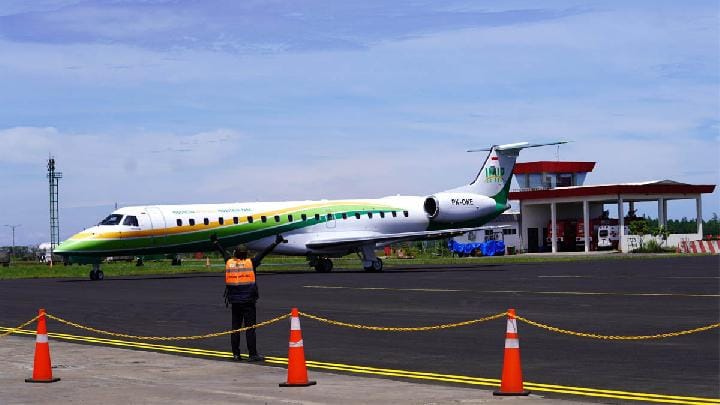
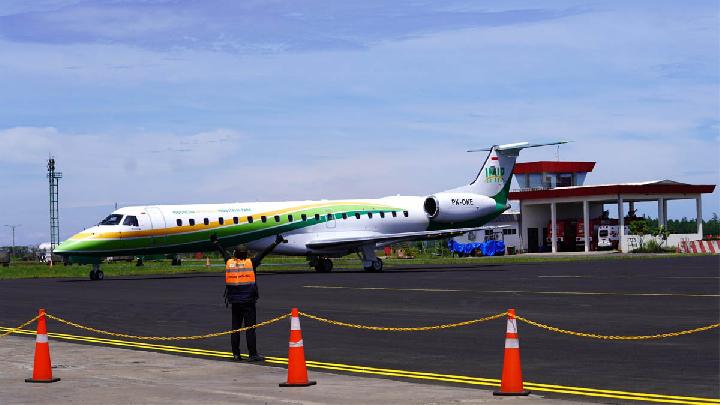
A privately operated airport inside one of the world’s largest nickel-processing hubs in Indonesia has ignited a national debate over sovereignty and regulatory oversight. It has been alleged that this private airport facility has been running for six years without any supervision from the central government and no routine presence of customs, immigration or AirNav oversight. This discovery has raised urgent questions about what passed through that airspace and on whose authority.
This private airport is located within the Indonesia Morowali Industrial Park (IMIP) spread over 4000-acre in Morowali in Central Sulawesi. This IMIP complex is powered by Chinese and Indonesian investment and is central to the global electric-vehicle battery supply chain. It has become a strategic pillar of Indonesia’s industrial strategy.
This controversy has also drawn political attention at both the national and regional levels. During a visit to Morowali last month, Indonesian Defense Minister Sjafrie Sjamsoeddin questioned the status of the airport stating that any such airport functioning without central authority challenges the integrity of the state, and there cannot be a ‘second republic’ within the Republic of Indonesia. Finance Minister Purbaya Yudhi Sadewa has also said that the government would verify whether the airport is properly licensed.
However, the IMIP management has rejected claims of irregular operations. According to them, Indonesia’s Aviation Law No. 1/2009 allows special-purpose airports to support industrial operations as long as they have ministerial approval.
However, this is not the only such airport in Indonesia. Similar airports with such special status are scattered in several other areas. What has made this airport controversial is the accusation that this airport has been operating regular international flights which is a violation of the law which prohibits such facilities from handling international traffic or general commercial passengers.
Indonesia Morowali Industrial Park (IMIP)
IMIP is one of the world’s largest nickel-processing and stainless-steel production complexes, located on the coast of Central Sulawesi. It plays a central role in Indonesia’s strategy to become a major global hub for electric-vehicle (EV) battery materials. Nickel from IMIP is a critical input for EV battery cathodes.
Indonesia holds the world’s largest nickel reserves and since it banned raw ore exports in 2020, foreign capital — especially from China — has flooded into processing and refining. IMIP is the flagship of that policy. Chinese companies, led by Tsingshan, built processing lines at a scale and speed unmatched by Western firms. The complex now feeds both the stainless-steel industry and the electric-vehicle (EV) battery sector, making it central to the global energy transition. IMIP is also a major point of cooperation and competition between China and Western economies amidst the global race for EV battery dominance.
In short, IMIP is strategic, both economically and geopolitically. And anything that happens inside it is instantly viewed through a national-security lens.
Why the Airport Was Seen as a Red Flag
Private airstrips are not inherently problematic. Remote mining and plantation regions often rely on them for logistical reasons. But IMIP’s airport raised deeper concerns for three structural reasons.
First, this was not a small landing strip used occasionally by executives. It reportedly handled regular traffic, including chartered movements of workers. Second, the controversy is centered on whether the airport had consistent on-site customs, immigration, and aviation regulators. In a highly strategic industrial zone dominating a global commodity supply, any hint of weak oversight quickly becomes a sovereignty question. And third, the IMIP is heavily Chinese-invested and Chinese-managed, i.e. its controlled by foreign entities.
It’s very likely that the issue wouldn’t get this much attention if it were mainly about domestic companies. But in the Indonesian point view, which is shaped by history, labour disputes, environmental controversies, and broader anxieties about China’s rise, it’s not a surprise that the idea of a Chinese-dominated enclave operating an airport with minimal state visibility has triggered suspicion.
China’s Deep Footprint and Why It Matters
In many ways, the IMIP complex is a physical manifestation of China’s industrial power. Chinese groups have provided the financing, engineering, technology, and management needed to turn raw Indonesian ore into battery-grade materials at scale. This is why Indonesia became the world’s centre of nickel processing so rapidly.
But this Chinese dominance also creates some sensitivities, such as economic leverage because if the nickel sector of Indonesia becomes too dependent on Chinese capital, Indonesia risks losing bargaining power. Rapid industrial growth also often outpaces the ability of local agencies to inspect, audit, and enforce rules, and the citizens start to worry that foreign companies may be carving out “special zones” where the state appears weaker.
Is there a China–West Battle Over Nickel?
The EV transition has turned nickel, cobalt, and rare earths into instruments of geopolitical leverage. While there is geopolitical competition around nickel, it is not symmetrical. China dominates Indonesia’s processing capacity by a wide margin.
China’s early investment in IMIP created a position of structural advantage. Western firms, bound by stricter environmental rules and slower corporate procedures, simply did not build smelters at comparable speed. As a result, Indonesia’s most strategic mineral zone is overwhelmingly shaped by Chinese corporate logic. Western companies and governments have only recently begun looking seriously at Indonesian nickel. What is happening in Indonesia is not an outright battle, but rather a more subtle contest for long-term control over supply chains.
A Window Into Indonesia’s Future Dilemma
The existence of a single airport doesn’t put Indonesia’s sovereignty at risk, but the IMIP airport controversy definitely raises questions about whether certain industrial enclaves are expanding faster than the state’s capacity to regulate them.
The real risk is not secession or foreign control. The real risk is governance erosion, and this fresh controversy is a microcosm of the tension Indonesia faces as it wants foreign investment but not foreign dominance, rapid industrialisation but not regulatory decay. It wants to lead the global nickel and battery ecosystem but without compromising sovereignty.
These are not easy balances to maintain. And these are common scenarios that any other country relying on too much foreign investment will have to deal with. IMIP’s airport did not create these dilemmas, but it has only exposed them vividly.