Bangladesh’s Pro-China Tilt
Implications for India’s Strategic and Security Interests
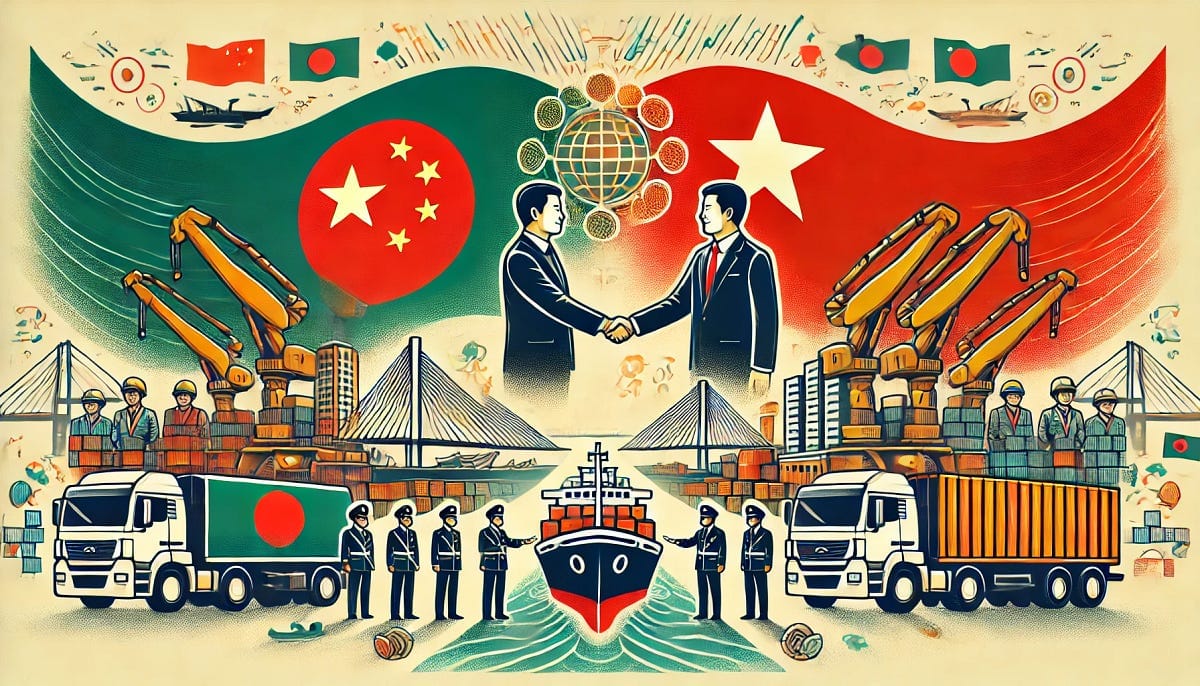
For decades, Bangladesh has carefully navigated its foreign relations, balancing its ties between India and China while ensuring economic growth and political stability. Historically, India played a crucial role in Bangladesh’s liberation in 1971, and over the years, the two countries have shared close economic, political, and cultural ties. However, under the new interim government, led by Muhammad Yunus, this delicate balance appears to be shifting decisively away from India.
Bangladesh’s recent diplomatic engagements, trade agreements, and military collaborations suggest an unmistakable tilt toward China. This realignment has serious implications for India, which has traditionally viewed Bangladesh as a key regional partner. While previous governments in Bangladesh sought to maintain a balanced approach, the current leadership is actively moving away from India’s sphere of influence and deepening its engagement with China and Pakistan.
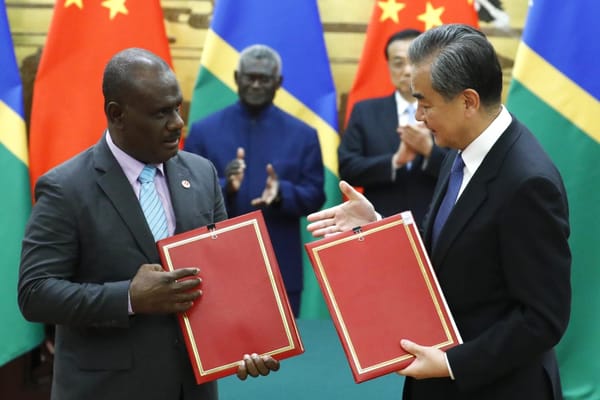
This shift was exemplified by recent negotiations where Bangladesh sought to renegotiate loans, expand military cooperation, and enter into a hydrological data-sharing agreement with China. The growing economic and security ties between Bangladesh and China are not just a matter of bilateral relations between the two countries, but they also directly impact India’s strategic interests in the Indian Subcontinent, particularly in areas of trade, water security, and defense.
A Brief History of Bangladesh-China Relations
Historically, Bangladesh and China had a tense relationship. During Bangladesh’s struggle for independence in 1971, China had backed Pakistan diplomatically and militarily, opposing the creation of a separate Bangladeshi state. For the first four years after independence, China refused to recognize Bangladesh, aligning itself with Pakistan. It was only in 1975 that diplomatic ties between China and Bangladesh were normalized.
Throughout the 1980s and 1990s, relations between the two countries steadily improved, with China emerging as an important economic and military partner. However, it was not until the early 2000s that China became a dominant player in Bangladesh’s economy. China has since become Bangladesh’s largest trading partner, with trade volume surpassing $25 billion by 2023. In 2022, China granted duty-free access to 98% of Bangladeshi exports, significantly strengthening economic ties.
Bangladesh’s military relationship with China has also expanded dramatically over the years. Currently, over 80% of Bangladesh’s military hardware comes from China, including tanks, fighter jets, and naval vessels. In 2016, Bangladesh purchased two Chinese Ming-class submarines, raising concerns in India about potential Chinese military influence in the Bay of Bengal.
Bangladesh’s Growing Dependence on China
One of the most significant aspects of Bangladesh’s pro-China tilt is its growing economic dependence on China. Bangladesh’s Foreign Affairs Adviser Touhid Hossain visited China last month, where the two countries negotiated loan repayment extensions, lower interest rates, healthcare collaboration, and a hydrological data-sharing agreement. While China has agreed to some of the requests in principle, the situation also reflects the classic pattern of debt-trap diplomacy that China has employed in other countries, such as Sri Lanka and Pakistan.
At the same time, Chinese companies have gained a dominant position in Bangladesh’s infrastructure sector, financing and constructing major projects such as the Padma Bridge Rail Link, Karnaphuli Tunnel, and multiple power plants. As a result, India’s influence over Bangladesh’s economy has significantly diminished.
Beyond economic ties, China’s growing role in Bangladesh’s water security should be another cause of concern for India. Bangladesh recently signed a hydrological data-sharing agreement with China, granting it access to water flow information on the Brahmaputra River. While this may seem beneficial for Bangladesh, it poses a major strategic risk for India. China already controls the upstream flow of the Brahmaputra, and its ongoing dam construction projects in Tibet could severely impact water availability for both Bangladesh and India. By integrating Bangladesh into its water management framework, China could further reduce India’s leverage in future negotiations on transboundary river-sharing agreements.
Bangladesh’s military engagement with China has also expanded over the years. Beyond weapons procurement, recent reports suggest that Bangladesh is allowing Chinese companies to assist in modernizing its naval base in Cox’s Bazar. This raises concerns that China could use Bangladesh as a launchpad for future naval operations in the Bay of Bengal, posing a direct security threat to India’s eastern coastline.
Additionally, Bangladesh’s rapprochement with Pakistan under the current regime is another indicator of its shifting foreign policy. There have been increasing discussions about expanding Bangladesh-Pakistan military cooperation, particularly in intelligence-sharing. Given Pakistan’s longstanding hostility toward India, any deepening of military ties between the two countries — especially under China’s influence — would be a strategic setback for India.
The Impact on India’s Strategic Interests
Bangladesh’s shift toward China and Pakistan is no longer a matter of speculation — it is an unfolding reality with serious consequences for India. Unlike previous governments that tried to maintain an impression of a balanced foreign policy, the new regime in Bangladesh is actively and openly deepening its ties with China and Pakistan, both of whom are India’s hostile neighbors.
For India, the challenge now is not just adapting to this new geopolitical landscape but actively countering Bangladesh’s pro-China shift through strategic pressure. Instead of expanding economic cooperation, India must leverage its geopolitical and economic tools to limit Bangladesh’s maneuverability and increase the costs of its growing alignment with China. This could include tightening border security, imposing stricter trade policies, and reassessing concessional arrangements that have long benefited Bangladesh at India’s expense.
Additionally, India should also exert diplomatic pressure on Bangladesh to ensure that critical security concerns such as Chinese influence in Bangladesh’s defense sector and the potential military use of Chittagong and Cox’s Bazar ports do not go unchecked. Water security can also be used as a strategic bargaining tool, with India reassessing its cooperation on transboundary river-sharing agreements in response to Bangladesh’s increasing reliance on China’s hydrological data.
At the same time, India must also abandon the outdated approach of bailing out neighboring countries from China’s debt traps without securing concrete strategic and economic benefits in return. In the past, India has extended financial and diplomatic lifelines to nations struggling under Chinese debt, only to see them continue to strengthen their ties with China. The Indian government must ensure that any future assistance to Bangladesh or other neighbors comes with clear, enforceable conditions that serve India’s long-term interests.
The era of Bangladesh’s balanced foreign policy is over. India must also adopt a firm, strategic, and coercive approach to safeguard its own interests. If it fails to push back against Bangladesh’s shift towards China, it risks allowing China to cement its influence in India’s eastern neighborhood, further tipping the regional balance of power in China’s favor and creating significant risks in India’s North Eastern states.