Argentina’s Economic Overhaul
Truth or Gimmick?
Introduction
In late 2023, people of Argentina elected Javier Milei, a figure who positioned himself as an outsider with extreme libertarian views, to address its deeply rooted economic woes. His promise was to implement sweeping reforms to combat the country’s history of economic instability.
As the US president elect Donald Trump announced the formation of a new department of government efficiency, people are beginning to question whether it’s an attempt to implement the Argentine model in the US.
Let’s take a look at the economic, social, and political changes that have happened in Argentina under Milei’s administration in the last one year.
Economic Conditions at the Start of Milei’s Term
When Javier Milei took office, Argentina was in dire economic straits. Inflation was rampant, with annual rates exceeding 200% and monthly increases nearing 25–26%. The fiscal deficit had ballooned, reportedly reaching figures around $120 billion, while poverty gripped about 40% of the population. The Argentine peso was overvalued, and the government employed multiple exchange rates to manage the economy. This was a system rife with inefficiencies and corruption.
Initial Economic Policy Actions
Milei’s response was centered around what he described as “shock therapy.” He devalued the peso by 50% to correct its overvaluation and eliminate the disparity between official and black-market exchange rates. His fiscal strategy involved severe spending cuts, including the suspension of public works, reduction of subsidies, particularly in energy and transportation, and a significant reduction in public sector employment to achieve fiscal discipline.
Legislative and Regulatory Reforms
Legislatively, Milei pushed for changes that redefined labor rights. He altered laws to make hiring and firing easier, including allowing dismissals for participating in strikes, which drew considerable criticism from unions. He also abolished the rental law, which had previously imposed restrictions on rental agreements, leading to an increase in housing availability and a decrease in rental costs. Additionally, Milei deregulated exports, removing bans to stimulate trade and bring in more foreign currency.
Government Restructuring
One of Milei’s most visible reforms was the restructuring of the government. He reduced the number of ministries from 18 to 9, merging departments like Environment and Culture into others or disbanding them altogether. This was part of his broader agenda to decrease bureaucracy and government intervention in the economy. The reduction of public sector jobs by over 70,000 was another move to cut government expenditure, though there are also opinions that these decisions inevitably led to increased unemployment among civil servants.
Economic Indicators Post-Reform
These economic reforms had varied impacts. Inflation, while still high, saw a significant monthly reduction, hitting around 2.7% by November 2024. This indicates some success in stabilizing prices, although the annual rate remains elevated due to the cumulative effect of previous years’ inflation. Milei managed to swing the budget from a deficit to a surplus after decades, signaling a new era of fiscal responsibility. However, these measures also coincided with an increase in poverty, now affecting over half the population, illustrating the social cost of the economic policies.
Social and Political Repercussions
The austerity measures and labor reforms met with significant resistance. Public protests became commonplace, with unions leading strikes against the new labor laws. Milei’s lack of a congressional majority has meant that his reforms often face legal challenges or modifications, highlighting the political tensions his policies have induced.
Sector-Specific Impacts
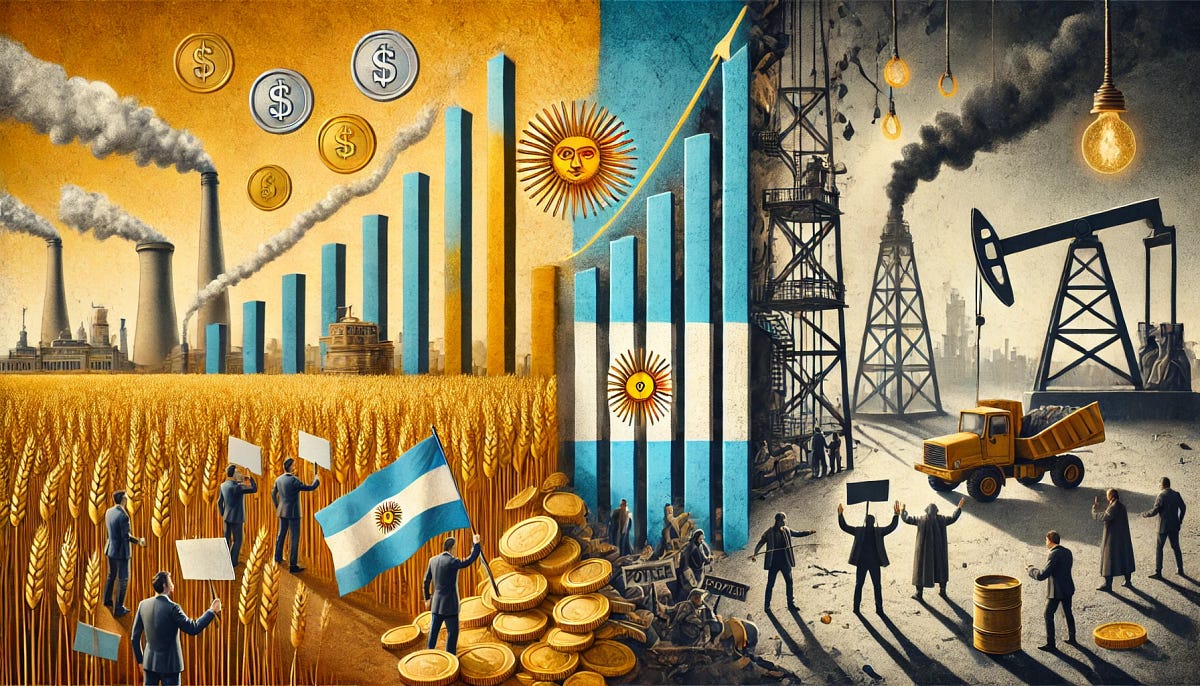
In agriculture, the export deregulation has had positive outcomes, with increased sales abroad. The energy sector has seen a boost in production, with oil and gas reaching record highs, though this has raised environmental concerns due to less regulatory oversight. The real estate market reacted favorably to the rental law changes, with more properties available for rent, which in turn helped reduce rental prices.
International and Institutional Reactions
Internationally, Milei’s policies have been met with a mix of optimism and caution. The IMF has praised Argentina’s newfound fiscal discipline, and some bond markets have reacted positively, but there’s apprehension about the sustainability and social implications of these reforms. Milei has also attempted to realign Argentina with liberal market economies, potentially affecting trade and foreign policy dynamics.
Challenges and Criticisms of the Reforms
Critics argue that while Milei’s reforms have achieved short-term fiscal goals, they lack a strategy for sustained growth and might exacerbate social inequality in the long run. The sudden cuts to public spending have led to concerns about the deterioration of public services, which could have long-lasting effects on education and health sectors.
Future Economic Projections
The economic future of Argentina under Milei remains uncertain. While some analysts predict a slow stabilization, others warn of social instability due to rising poverty levels. There’s an anticipation of policy adjustments as Milei navigates the balance between economic revival and social stability.
Conclusion
Javier Milei’s presidency has been marked by a radical economic overhaul aimed at fiscal recovery and market liberalization. While there have been signs of economic improvement, like reduced inflation rates and a budget surplus, critics also claim that these have come at the expense of increased poverty and social unrest. The Argentine people are at the heart of this economic experiment, so their lives are the barometer by which Milei’s tenure will ultimately be measured. As time progresses, the debate over the efficacy and morality of his methods will continue to unfold.