A Pledge of Power or a Symbol of Strain?
The 2025 NATO Summit
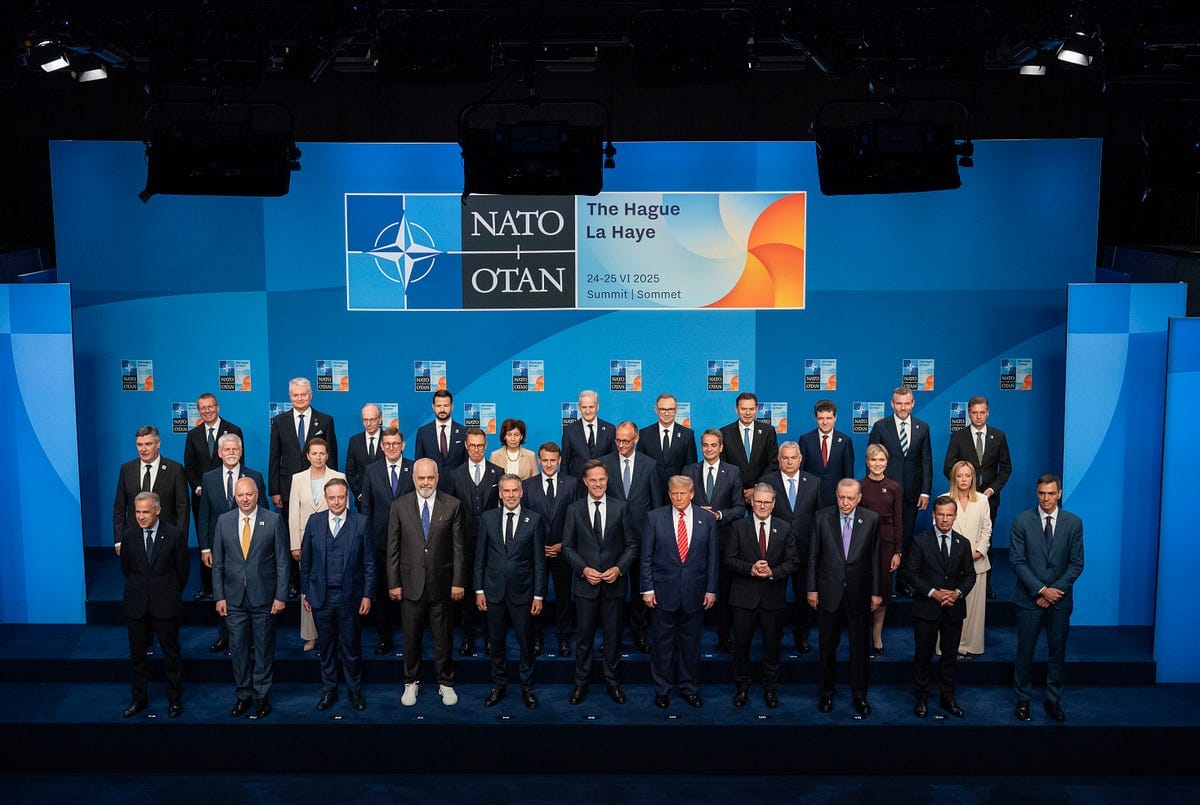
The 2025 NATO Summit, held in The Hague on 24 & 25 June, marked a historic moment for the transatlantic alliance. Hosted by the Netherlands for the first time, the summit came at a critical juncture in global politics. With a newly appointed Secretary General, Mark Rutte, and mounting pressures from both Russia and internal divisions, the summit sought to reassert NATO’s unity and strategic resolve. While its headline achievement was a new defence spending pledge, the summit also laid bare the tensions, contradictions, and challenges that NATO faces in a rapidly shifting global order.
A Changing World and an Alliance Under Pressure
The Hague summit followed a series of crucial gatherings in recent years, including the 2023 Vilnius summit, which emphasized NATO’s commitment to Ukraine amidst Russian aggression. Since then, the alliance has been grappling with several competing priorities: preparing for long-term defence, modernizing military capabilities, managing political disunity, and maintaining credible deterrence without provoking escalation.
The backdrop to the summit was grim. Russia’s war in Ukraine rages on with no clear end in sight. Hybrid threats — including cyberattacks, disinformation campaigns, and sabotage — have become more frequent. Across the Atlantic, the United States has repeatedly signaled frustration with what it perceives as Europe’s underinvestment in security. Simultaneously, tensions in the Middle East, including Iran-Israel confrontations, have forced NATO to widen its strategic lens beyond Europe.
The 5% Pledge: A New Benchmark for Defence Spending
The most consequential outcome of the summit was the agreement among member states to aim for a total of 5% of GDP in annual national security expenditure by 2035. This includes at least 3.5% specifically for NATO-compatible defence outlays and the remainder for broader security priorities such as cyberdefence, border protection, and intelligence. The commitment is not legally binding but sets a strong political benchmark, with a mid-term review scheduled for 2029.
Supporters hailed this as a transformative move. The UK, Poland, and the Baltic states championed the initiative, arguing it sends a clear signal to adversaries that NATO is serious about defence. For them, the threat from Russia is existential, and any delay in building deterrence capacity could prove catastrophic.
However, the pledge also exposed significant internal rifts. was granted some flexibility regarding its defence spending path, with NATO reportedly expressing doubts that its claimed 2.1% of GDP meets real capability targets. Belgium and several southern European countries also voiced concerns over feasibility and questioned whether GDP-based targets are the best metric for measuring effective defence.
Article 5 Reaffirmed, But Trust Tested
The summit reaffirmed NATO’s core principle: Article 5, the collective defence clause, remains sacrosanct. Leaders declared that any attack on a NATO member would be met with a unified response. Yet, this assertion came against a backdrop of skepticism. Many European leaders remain unsure about Washington’s long-term commitment, especially with U.S. politics becoming increasingly inward-looking and unpredictable.
Zelensky’s presence at the summit served as both a reminder and a provocation. While NATO reiterated its support for Ukraine — pledging more military aid, intelligence sharing, and training — there was still no formal membership offer. Ukraine’s leadership warned that unless NATO accelerates its integration and deterrence strategy, Russia could attempt provocations against a NATO member within the next five years.
Diplomacy, Drama, and Diverging Agendas
Diplomatic choreography was on full display. Leaders sought to maintain a united front, carefully managing the optics to prevent internal disagreements from dominating the headlines. Trump’s outsized presence loomed over discussions, with many leaders engaging in a charm offensive to keep him on board. British Prime Minister Keir Starmer called the summit a “new dawn” for transatlantic unity, while also endorsing the 5% pledge — a rare alignment of progressive politics with high military ambition.
France and Germany, traditionally cautious about militarisation, were more reserved. They emphasized the need for strategic autonomy, burden-sharing, and a more efficient defence industry rather than symbolic targets. Behind closed doors, there were also discussions about creating alternative European security frameworks, such as the Weimar+ initiative, which could serve as a fallback should U.S. commitment to NATO weaken further.
Industrial Readiness and Innovation in Defence
Beyond policy declarations, the summit agreed to practical steps: increasing defence production, securing supply chains, and boosting military innovation. NATO pledged to increase defence stockpiles by 30%, ease internal trade barriers for defence goods, and invest in joint research for next-generation capabilities — particularly in cyber and space.
This pivot toward industrial readiness reflects lessons learned from the Ukraine war, where slow delivery of equipment and ammunition shortages hampered operations. The summit also underscored the need for resilience against hybrid threats, with commitments to build civil preparedness and counter hostile influence campaigns.
Geopolitical Implications for the Wider World
The decisions made at The Hague will reverberate far beyond NATO’s borders. The increased military spending target could lead to a rebalancing of global arms flows and defence procurement, potentially shifting alliances. Nations like India, which maintain strategic autonomy, should closely watch how Europe’s defence priorities evolve — and whether NATO’s renewed ambition leads to more cooperation or greater geopolitical polarization.
Meanwhile, Russia dismissed the summit as Western militarism. Kremlin spokespersons warned that the 5% pledge was a provocation and vowed to strengthen Russia’s own deterrence. China remained silent but likely sees the developments as part of a broader containment strategy.
Looking Ahead: Unity or Unraveling?
The Hague summit was both a show of strength and a moment of reflection. NATO appears determined to adapt to the new security landscape — but questions remain. Can member states translate ambitious pledges into real capability? Will political unity hold amid fiscal pressures and domestic divides? And how will the alliance respond if the U.S. pulls back or if conflict expands beyond Ukraine?
For now, the 2025 summit will be remembered as the moment NATO raised the bar for defence spending and sought to chart a common path through global instability. Whether that path leads to renewed strength or internal strain will depend on actions taken long after the photo-ops fade.
#NATOSummit2025 #TheHagueSummit #GlobalSecurity #Geopolitics #DefenseSpending #UkraineWar #TransatlanticRelations #NATOAlliance #DonaldTrump #EuropeanDefense #RussiaUkraineConflict #CyberDefense #HybridWarfare #Article5 #MilitaryStrategy #InternationalRelations #ForeignPolicy